Water Line Repair & Replacement in Loveland, CO
Low pressure at every fixture, or a wet spot in the yard between the street and the house? The main water service line may be the actual cause, not anything inside the home.
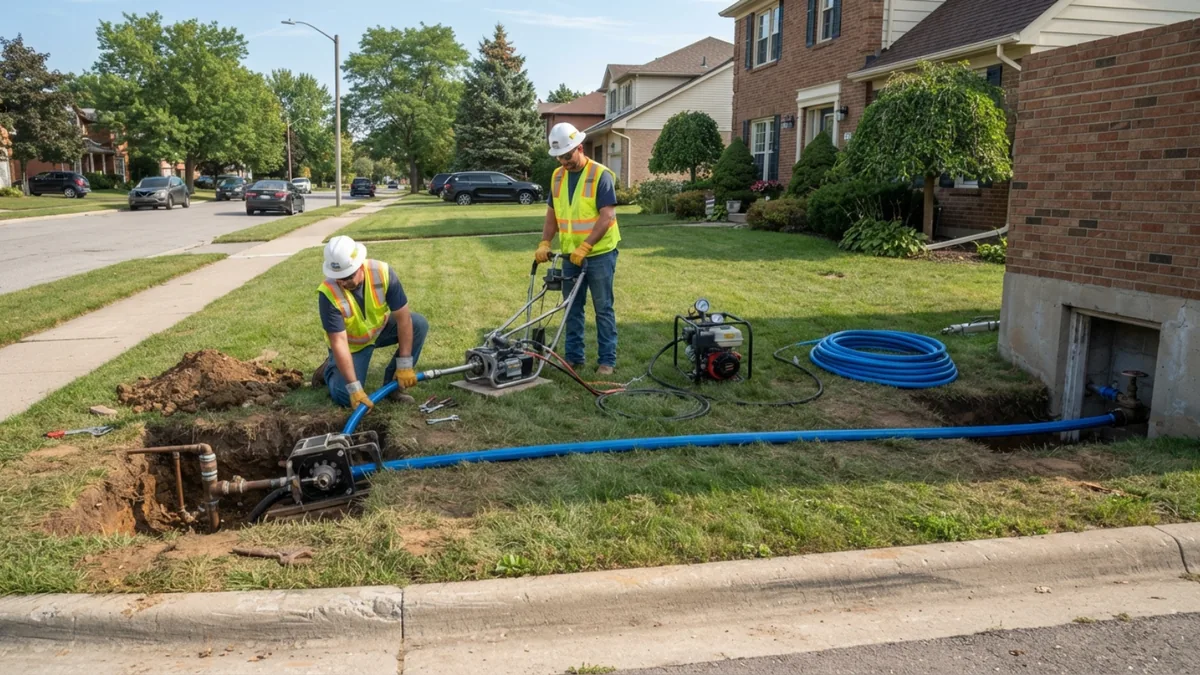
Not A Fixture Problem
Low Pressure Everywhere
Every fixture affected at once, not just one, points to the incoming line.
Wet Spot In The Yard
A soggy or unusually green patch between the street and the house.
Unexplained High Bill
A sustained increase in usage with no new source inside the house.
Discolored Water At Every Tap
Rusty or cloudy water from every fixture can mean a corroding service line.
Homeowners Usually Blame The Wrong Thing First
Low water pressure at every fixture in the house gets blamed on the fixtures themselves more often than it should. New faucet aerators, a new showerhead, even a new water heater sometimes get tried first, when the actual bottleneck is the underground line delivering water to the house in the first place. If pressure is down everywhere at once rather than at one specific fixture, that's the clue the problem sits upstream of the house's interior plumbing entirely, on the water line itself.
Older galvanized service lines are the ones most likely to end up here, for the same reason galvanized interior pipe does: the pipe narrows gradually from internal corrosion rather than failing all at once. It narrows gradually as rust builds up on the inside of the pipe wall. That's why falling pressure often shows up slowly over a year or two rather than as a single sudden event, and why it's easy to blame something else first. That gradual pattern is part of why homeowners often try replacing fixtures or a pressure regulator first, since a slow decline over months doesn't feel like the kind of problem a buried pipe would cause, even though that's exactly what it usually is.
Pressure Down At Every Fixture?
The service line, not the fixtures, is the likely cause.
Trenchless Options Where The Site Allows
A single confirmed break in an otherwise sound line can sometimes be spot-repaired. A line showing corrosion or reduced flow along its full length, common in older galvanized service lines, usually calls for full replacement instead. Trenchless replacement pulls a new line through the old path using small access pits at each end, which works in most yards, though a driveway crossing, mature trees, or other buried utilities occasionally rule it out in favor of a traditional trench. The replacement pipe material and burial depth still follow the same Uniform Plumbing Code (UPC) requirements the city inspects against.
A confirmed spot repair on the low end, full trenchless or traditional replacement on the high end, depending on line length and site access. Exact quote after camera and pressure testing.
How A Water Line Call Works
Test
Pressure test and locate to confirm the line is the actual cause.
Diagnose
Camera or leak-detection equipment finds the specific problem.
Repair/Replace
Spot repair or full replacement, trenchless where the site allows.
Verify
Pressure retested at every fixture before we finish.
Water Line Questions From Loveland Homeowners
The water line, also called the service line, runs underground from the street or curb stop to your house. Once water enters the home, that's the interior plumbing, which is a separate system covered under repiping, not this.
Low pressure at every fixture in the house at once, rather than just one, a wet or unusually green patch of yard between the street and the house, and an unexplained jump in your water bill are the main signs.
Often, yes. Trenchless replacement can pull a new line through the old one's path using small access pits, avoiding a full-length trench in many yards.
This varies by exact location, but typically the homeowner is responsible for the line from the curb stop or meter to the house, while the city maintains the main in the street. We can help clarify which section is yours.