Water Filtration Installation in Loveland, CO
Chlorine taste, cloudy water, or sediment at the tap addressed with whole-home or under-sink filtration, sized to your actual water quality concerns.
Signs Worth Addressing
Chlorine Taste Or Smell
Municipal treatment leaves a noticeable taste and odor for some households.
Cloudy Or Discolored Water
Sediment or mineral content affecting water clarity.
Wanting Better Drinking Water
Households looking to skip bottled water for everyday drinking and cooking.
Specific Contaminant Concerns
Wanting to address a particular substance found in local water testing.
Two Different Problems, Not One
Filtration and softening get lumped together, but they solve different problems and often work best paired rather than as either-or. A softener is specifically built to remove the calcium and magnesium that cause hardness, scale, and the mineral buildup covered elsewhere on this site. A filter is built for taste, odor, chlorine, sediment, and specific contaminants, none of which a softener's resin bed is designed to touch. A household with both hard water and taste concerns typically benefits from both systems working together, not a single unit trying to do both jobs.
Sediment is worth a specific mention for older Loveland homes on original supply lines, since aging galvanized pipe can shed small particles of rust and scale into the water over time. A whole-home sediment filter catches that before it reaches fixtures and appliances, which is a different, more mechanical problem than the taste and odor issues a carbon filter is built to address.
Reverse osmosis deserves a specific mention too, since it's the most thorough option available for a single tap. It forces water through a semi-permeable membrane that removes a much broader range of dissolved substances than a standard carbon filter. That's why it's the usual choice when a household wants the highest level of treatment specifically for drinking and cooking water rather than every fixture in the house.
Not Sure Which System You Need?
We'll walk through what your water actually needs addressed.
Whole-Home Vs. Under-Sink
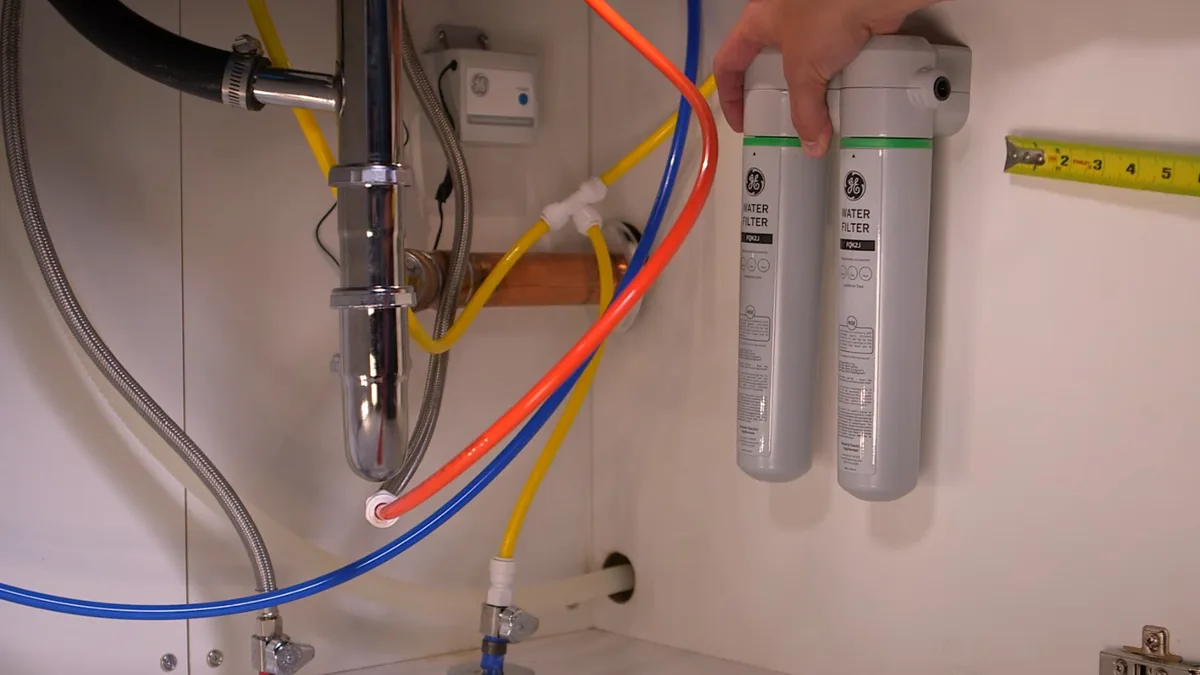
Whole-home filtration installs at the point where water enters the house, treating every fixture at once, showers, laundry, and every tap. Under-sink filtration treats water at one specific location, most commonly the kitchen, and is where reverse osmosis systems typically go for the highest level of treatment on drinking and cooking water specifically. Many households run both, whole-home for general use and a dedicated under-sink system for drinking water.
A basic under-sink system on the low end, a whole-home system with reverse osmosis on the high end. Exact quote after discussing your water quality concerns.
How An Installation Works
Discuss
Talk through taste, odor, or specific water quality concerns.
Recommend
Right-sized system for whole-home, under-sink, or both.
Install
System connected at the main line or the specific fixture.
Verify
Flow and filtration checked before we finish.
Filtration Questions From Loveland Homeowners
Often both, since they solve different problems. A softener removes the calcium and magnesium that cause hardness. A filter targets taste, odor, chlorine, and sediment, which a softener doesn't address.
Whole-home filtration treats every fixture in the house at the point where water enters. Under-sink filtration, often paired with reverse osmosis, treats water at one specific tap, usually the kitchen, for drinking and cooking.
Different filter media target different things, sediment, chlorine, certain metals, or dissolved solids with reverse osmosis. We can talk through what's actually in your water and what a given system does and doesn't address.
Filter cartridges need periodic replacement, typically every few months to a year depending on the system and usage. We can set up a straightforward maintenance schedule.